
HEPA Filter vs Water Filtration System: What’s the Difference?
Published by HYLA MALAYSIA - 1 June 2026

When it comes to keeping your home clean, many people focus on what they can see — dust on shelves, dirt on floors, or stains on carpets. However, the real concern often lies in the tiny airborne particles that are invisible to the eye.
Dust mites, pet dander, pollen, fine dust, and other allergens can continue circulating inside the home even after regular cleaning. This is why filtration technology matters when choosing a cleaning system.
Two of the most commonly discussed technologies today are HEPA filtration systems and water filtration systems. But what exactly is the difference between them, and which one is better for your home?
What Is a HEPA Filter?
HEPA stands for High-Efficiency Particulate Air. A HEPA filter is designed to trap extremely small particles as air passes through a dense filter material.
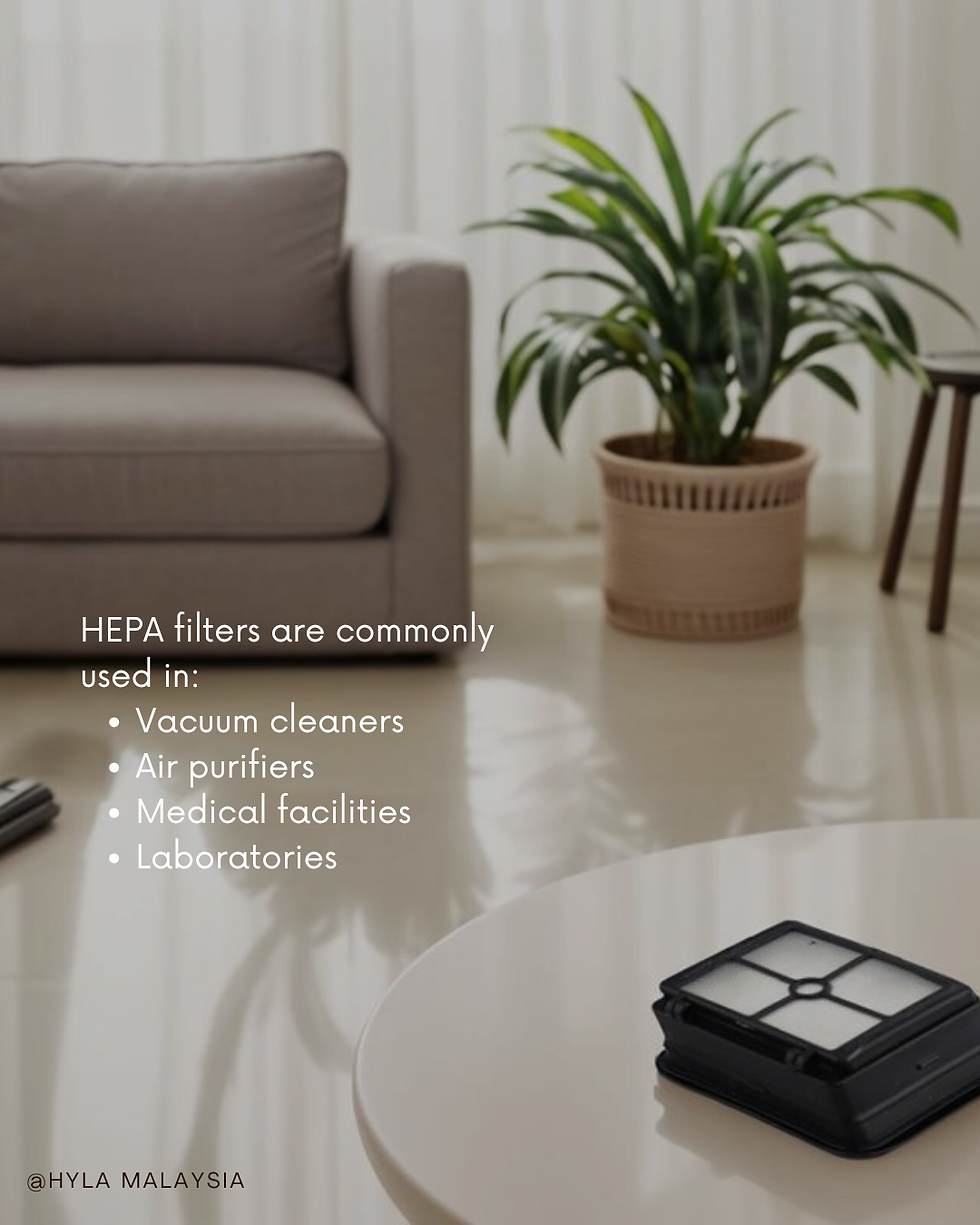
HEPA filters are commonly used in:
Vacuum cleaners
Air purifiers
Medical facilities
Laboratories
A properly functioning HEPA filter can capture fine particles such as dust, pollen, and pet dander, making it a popular choice for households concerned about indoor air quality.
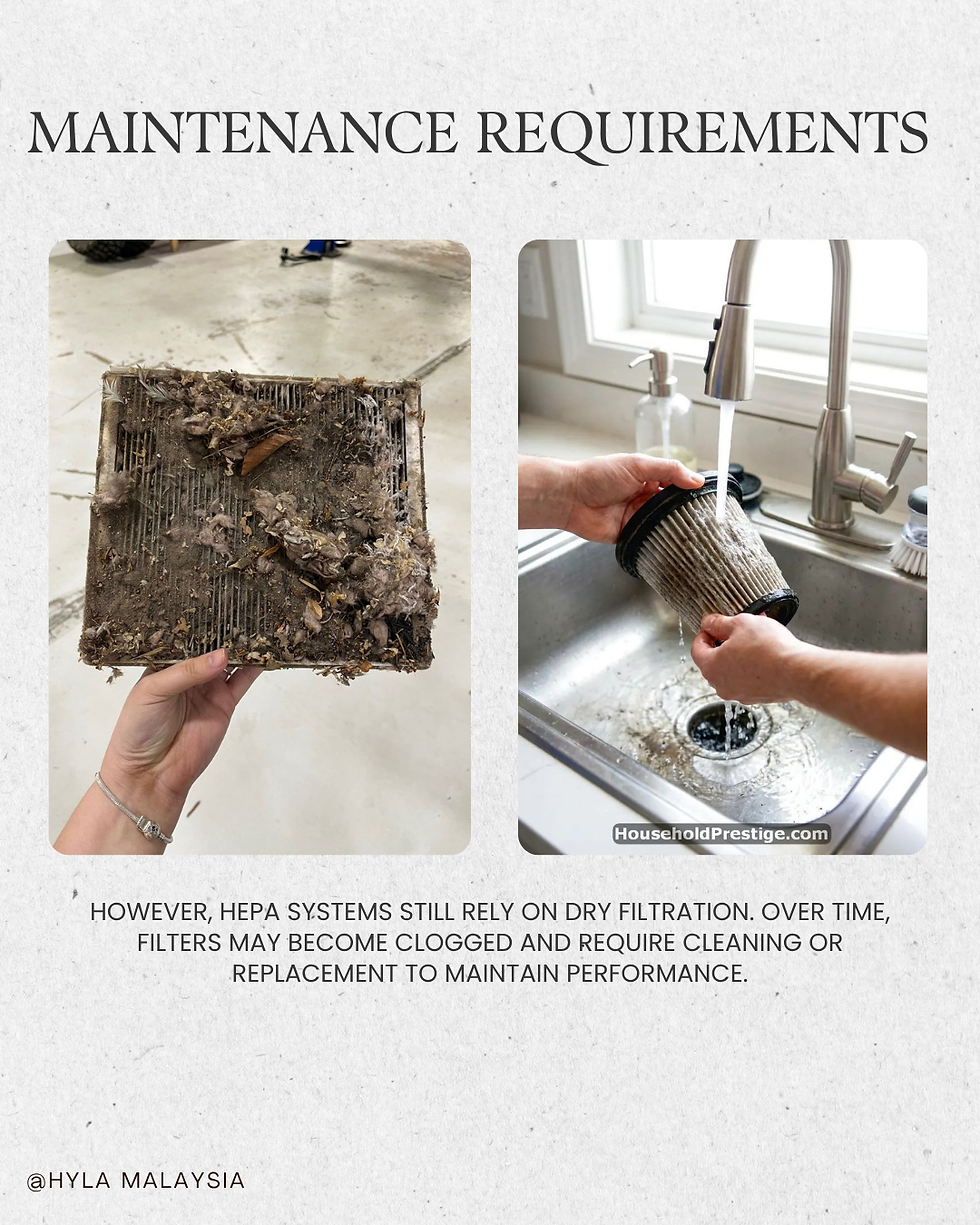
However, HEPA systems still rely on dry filtration. Over time, filters may become clogged and require cleaning or replacement to maintain performance.
In some cases, poor maintenance or weakened seals may also reduce filtration efficiency.
HEPA Filter vs Water Filtration: Key Differences
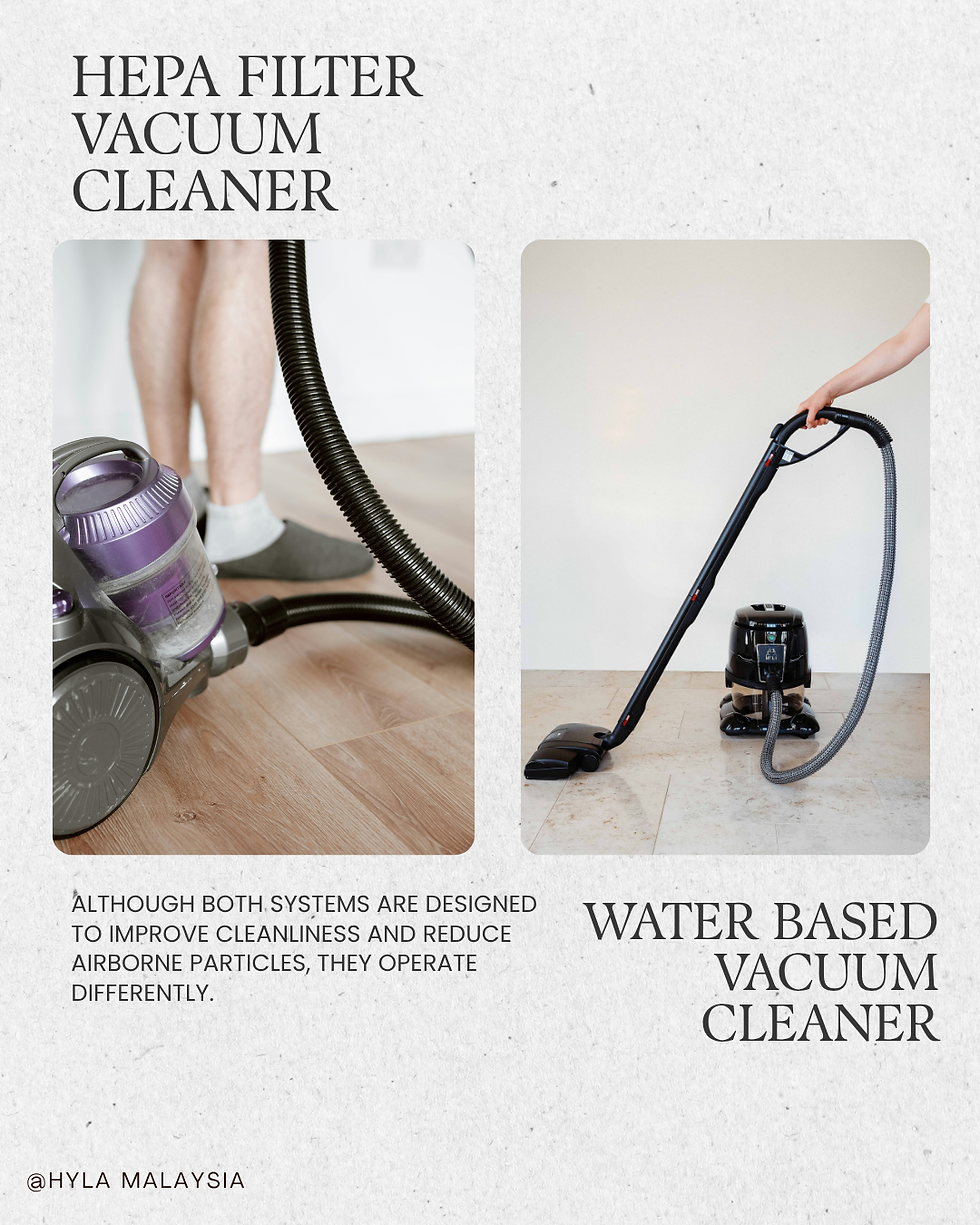
Although both systems are designed to improve cleanliness and reduce airborne particles, they operate differently.
1. Filtration Method
HEPA systems use dense physical filters to trap particles.
Water filtration systems use water to capture dirt and dust particles before air is released back into the environment.
2. Dust Handling
With HEPA vacuums, dirt is usually stored in a dust container or bag.
Water filtration systems trap debris directly in water, which many users find more hygienic during disposal.
3. Maintenance Requirements
HEPA filters often require:
Filter replacement
Periodic cleaning
Monitoring for clogging
Water filtration systems typically require:
Emptying dirty water
Cleaning the water basin after use
4. Odour Control
Dry dust containers can sometimes retain odours over time, especially in homes with pets.
Water filtration systems may help reduce lingering smells because dirt and debris are trapped in water instead of remaining dry inside a container.
5. Airflow Performance
As HEPA filters accumulate dust, airflow performance may gradually decrease if filters are not maintained properly.
Water filtration systems are designed to maintain consistent airflow while separating dirt through water.
What Is a Water Filtration System?
A water filtration system uses water as the primary filtration medium instead of relying solely on dry filters or dust bags.
As dust and dirt enter the machine, they are pulled through water, where particles become trapped inside the water basin. Cleaner air is then released back into the room.
This process helps reduce the chances of fine dust particles escaping back into the air during vacuuming.
Unlike traditional dry collection systems, dirt is stored in water rather than accumulating in a dust bag or dry container.
Which System Is Better for Allergy-Sensitive Homes?
Both HEPA filtration and water filtration systems are designed to help reduce airborne particles commonly found indoors.
HEPA filters are highly effective at trapping fine particles, while water filtration systems are often preferred by users who want to minimize contact with dry dust during disposal.
For households with:
Pets
Young children
Fabric furniture
Carpets
Allergy sensitivities
Indoor air quality and proper filtration become even more important.
In Malaysia’s humid climate, dust, allergens, and trapped moisture can accumulate quickly inside mattresses, sofas, curtains, and carpets. Choosing the right filtration system can support a cleaner and fresher indoor environment.

Why More Homeowners Are Exploring Water Filtration Systems
In recent years, water filtration cleaning systems have gained attention because they combine:
Vacuum cleaning
Air cleaning
Dust separation
Deep cleaning capabilities
Many homeowners appreciate the ability to physically see the dirt trapped inside the water after cleaning.
This visual experience often creates greater awareness of how much hidden dust exists inside the home.

Why More Families Are Investing in HYLA
A clean home is not just about appearance — it is also about the quality of the air you breathe every day.
Unlike conventional vacuum cleaners that rely heavily on dry filters and dust storage, the HYLA system uses water-based separation technology designed to trap dust, dirt, and airborne particles inside water before cleaner air is released back into the home.
What makes HYLA different is that it is more than just a vacuum cleaner. It is a complete home cleaning and air care system designed to support a cleaner indoor environment for modern households.
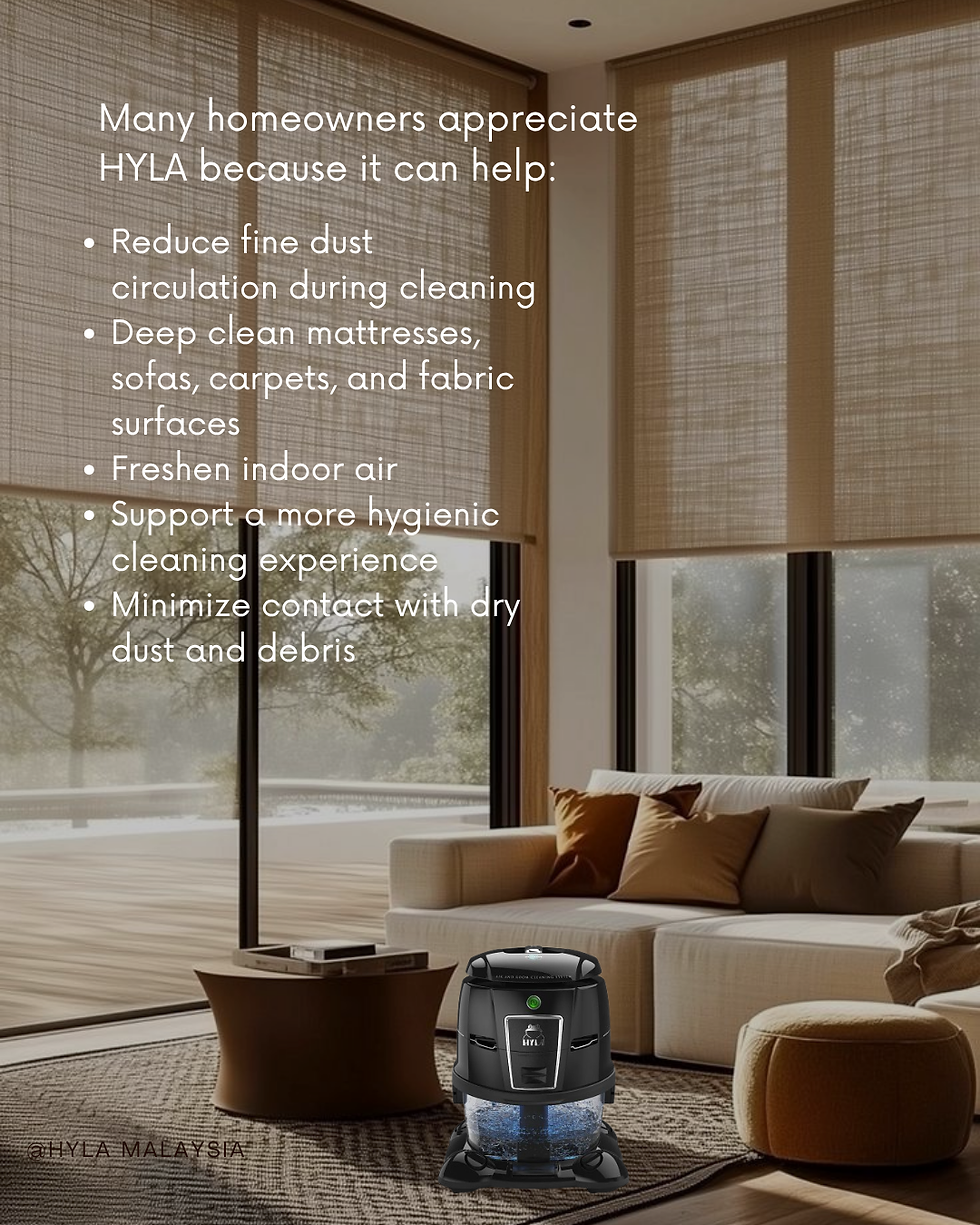
Many homeowners appreciate HYLA because it can help:
Reduce fine dust circulation during cleaning
Deep clean mattresses, sofas, carpets, and fabric surfaces
Freshen indoor air
Support a more hygienic cleaning experience
Minimize contact with dry dust and debris
For families with children, pets, allergy sensitivities, or busy lifestyles, maintaining indoor cleanliness can become increasingly important — especially in Malaysia’s humid environment where dust, allergens, and odours can build up quickly indoors.
Investing in a HYLA system is not simply about buying another household appliance. It is about investing in long-term home hygiene, cleaner living spaces, and everyday comfort.
Rather than replacing vacuum cleaners frequently or continuously purchasing disposable filters and dust bags, many homeowners see HYLA as a long-term solution designed for deeper and more effective cleaning.
When you consider how much time people spend indoors, the quality of your home environment matters more than ever.
Interested in experiencing how water filtration works in a real home setting? Contact Hyla Malaysia to learn more about advanced water-based cleaning technology and indoor air care solutions.
A cleaner home starts with cleaner air.


Comments