
Still Sneezing at Home? Your Vacuum Cleaner Might Be the Problem
Published by HYLA MALAYSIA - MAY 2026

Many people clean their homes regularly, yet they still experience dust, allergies, or constant sneezing. Floors look clean, surfaces appear tidy, but the air inside the house may tell a different story.
You may even notice that after 8 hours of sleep, you still wake up feeling tired, heavy, or uncomfortable. Some people experience morning sinus congestion, itchy eyes, or even symptoms similar to migraines without realizing that indoor air quality could be the hidden cause.
The real issue is not how often we clean — it’s how we clean.
The Problem: Dust You Cannot See
Most traditional vacuum cleaners rely on bags or filters to trap dirt. While they collect visible debris, microscopic dust particles and allergens can escape back into the air during vacuuming.
These tiny particles include:
Dust mites
Pet dander
Pollen
Fine dust and airborne allergens
Because mattresses, sofas, carpets, and curtains store large amounts of invisible dust, exposure continues even while resting or sleeping.

Common signs your home may have hidden dust problems include:
Sneezing or blocked nose at home
Waking up tired despite enough sleep
Head discomfort or migraine-like feelings
Itchy skin or watery eyes indoors
Dust returning quickly after cleaning
This explains why some homes feel dusty again shortly after cleaning.
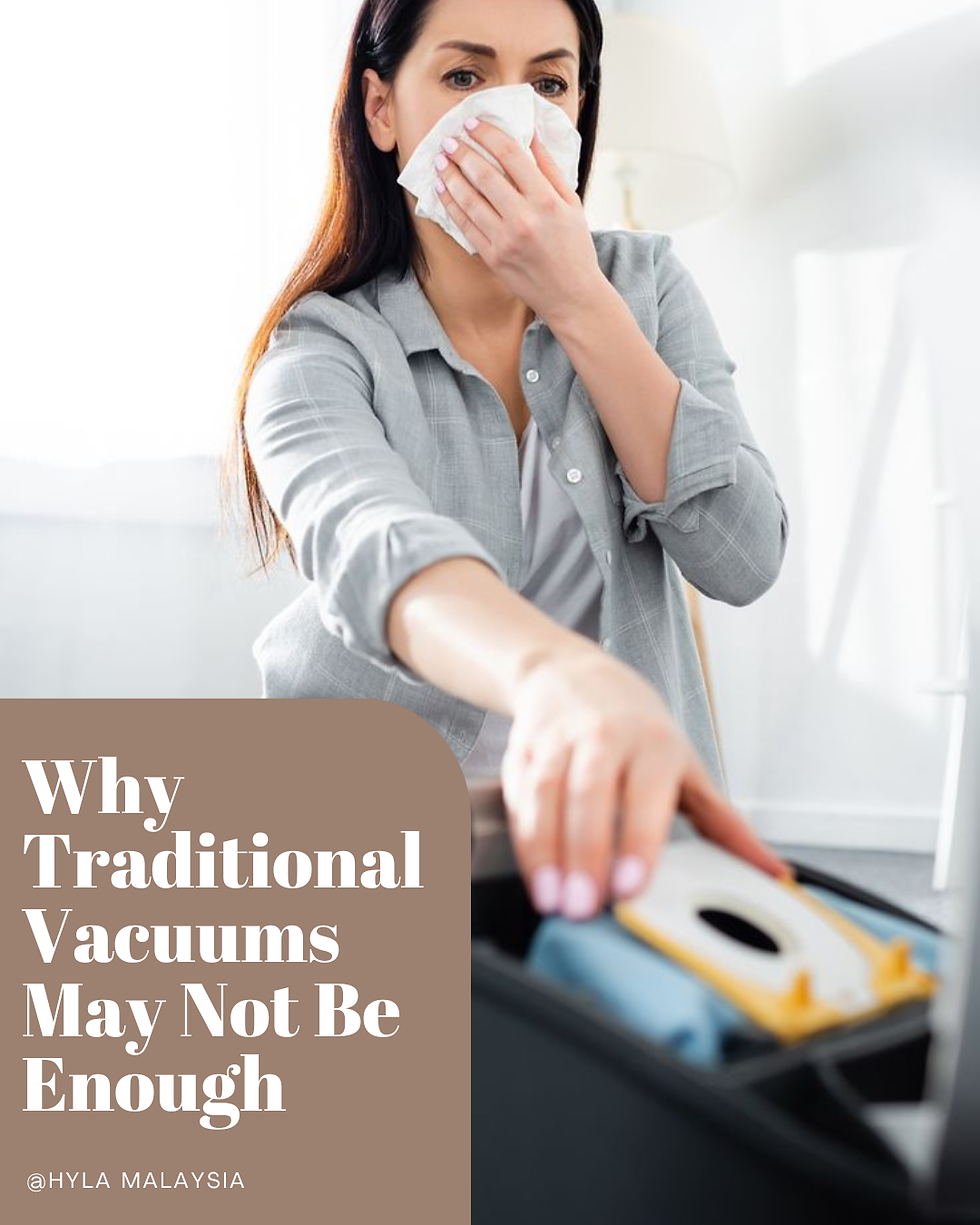
Why Traditional Vacuums May Not Be Enough
Standard vacuum systems use airflow combined with dry filtration. Over time, filters clog, suction decreases, and fine particles circulate back into the environment.
Instead of removing dust completely, some vacuums simply move dust around, allowing microscopic allergens to remain suspended in the air you breathe daily.
The Solution: Water-Based Filtration Technology
Water filtration works differently. Instead of trapping dust in a bag or dry filter, dirt and allergens are captured in water, preventing them from escaping back into the air.
This method helps:
Reduce airborne dust
Improve indoor air freshness
Support better rest and sleep comfort
Create a cleaner living environment
Introducing HYLA
HYLA uses a water-based filtration system designed not only for surface cleaning but also for improving indoor air quality. By binding dust and allergens with water, particles remain trapped instead of recirculating.
Many users notice:
Less lingering dust
Fresher air after cleaning
Cleaner mattresses, sofas, and carpets
Improved comfort while sleeping and resting

A Different Cleaning Experience
Cleaning should not only make a home look clean — it should make the home feel healthier.
When cleaning technology focuses on air quality as well as surfaces, the difference can be felt through better breathing, deeper rest, and a more comfortable home environment.

If you clean regularly but still struggle with dust, fatigue after sleep, or recurring allergy symptoms, it may be time to rethink your cleaning system rather than your cleaning routine.
Sometimes, the solution is not cleaning more — but cleaning smarter.
Traditional cleaning focuses mainly on visible dirt. HYLA goes beyond surface cleaning by addressing what cannot be seen: airborne dust, allergens, and pollutants that affect the air you breathe every day.
Choosing HYLA means investing in more than a vacuum cleaner. It is a long-term solution designed to:
Improve indoor air quality
Reduce dust circulation inside the home
Support better sleep and daily comfort
Create a healthier environment for family members, children, and pets
Instead of cleaning repeatedly with temporary results, HYLA helps you clean more effectively, so your home stays fresher for longer.
Because a truly clean home is not only about what looks clean — it’s about how your home makes you feel, breathe, and live every day.
Find out more at www.hyla-malaysia.com


Comments